Showing posts with label travel. Show all posts

Monday, March 26, 2007


Any discomfort from the scorching midday sun was pushed to the back of my mind thanks to the breathtaking beauty of the tropical islands that drifted by as we sliced through the vibrantly blue Caribbean waters off the coast of the province of Bocas del Toro, Panama. During the 3-hour boat ride from Isla Colon to the small indigenous town of Rio Cañas, all I could think of was what may lie beneath the glassy water’s surface: corals, colorful tropical fish, sea turtles?

From March 16-19, four Peace Corps Panama Volunteers and their three community counterparts had the opportunity to accompany Cristina Ordonez from the Caribbean Conservation Corporation (CCC) to Rio Cañas, where she led a hands-on sea turtle conservation seminar. The attendees arrived from various sites on the Pacific coast of Panama, ranging from Isla Cañas in Los Santos, to Puerto Pedregal in Chiriquì. The purpose of the seminar was to train the volunteers and their counterparts in appropriate conservation techniques regarding sea turtle conservation projects. All of the attendees work directly with sea turtle conservation projects in their communities. Upon return to their communities, the volunteers and their counterparts will train other community members involved in sea turtle conservation efforts.

Ordonez, in cooperation with the CCC based out of Gainesville, Florida, has been working in the Ngöbe-Bugle town of Rio Cañas for the past 9 years. There, she conducts night patrols of the 24-km beach in order to analyze the genetics, nesting, and migratory patterns of the three species of sea turtles that nest on the Caribbean coast of Panama: the Leatherback (Dermochelys coriacea), Green turtle (Chelonya midas), and Hawksbill (Eretmochelys imbricata), all of which are in danger of extinction. Over the past 9 years, through educational programs, she has transformed the community into a group of conservationists with a passion for saving the species that frequent the beaches. There are now many community members who help patrol the large beach and collect scientific data that contribute to the conservation project. This is an ideal example of community-based conservation, one that the Peace Corps Volunteers hope to follow in order to set up similar sustainable conservation programs in their communities around the country.

In addition to educating the community members of Rio Cañas about sea turtle conservation, Ordonez and the CCC offer seminars for university students and other volunteers interested in conserving the species. During the 3-day seminar in March, the Peace Corps Volunteers and counterparts received lectures about sea turtle biology, conservation, education techniques, and ecotourism projects. In addition, the attendees were invited on the nightly beach patrols, where important data such as measurements of the animals, number of eggs, and location of nests, are noted for future analysis. March is the first of five months of nesting for the Leatherback sea turtle, the largest of the eight species of sea turtles in the world, on the Caribbean coast of Panama. During two nights of patrols, the attendees took data on eight adult female Leatherbacks who were in the process of laying their eggs on the beach. In the morning, an inventory of the total number of nests was taken. During this time period, about 15 Leatherback sea turtles were arriving to the beach every night to lay their eggs, the largest measuring over five feet long.

The sight of the large, primordial creatures placing their glossy, golf-ball size offerings into the dangerous world was incredible. The mothers breathed heavily, making sounds that one would have expected to hear millions of years ago, during the time of the dinosaurs, an era that the sea turtles have survived. Since only one of 1,000 of the eggs placed into the sand will survive to adulthood, urgent efforts must take place to save the species that are being outrun by their primary predator: the human being. Illegal poaching of the sea turtles and their eggs still takes place, especially in developing countries such as Panama. Increased land and water contamination created by increased population size and economic development also contribute to the decline of the species. Conservation efforts such as those of Ordonez and the Peace Corps Volunteers are crucial in preserving the ecosystems of our world’s oceans.

Saturday, January 06, 2007

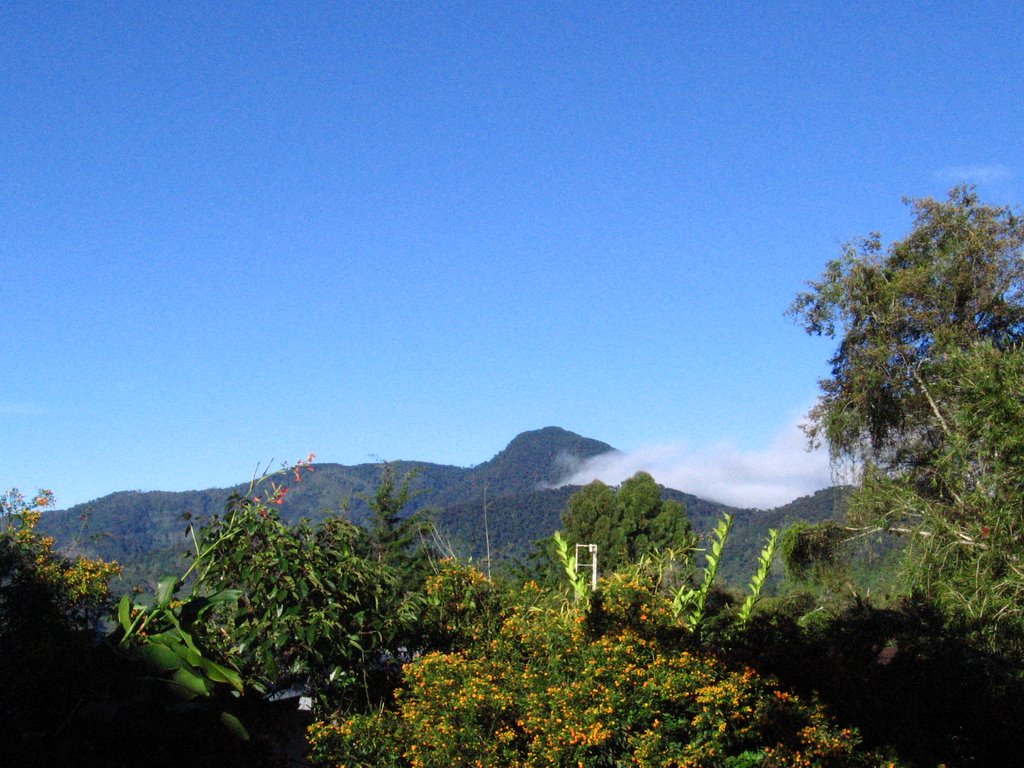
From a cloud forest surrounding Volcan Baru to a sponge garden overtaking a wreck in the Caribbean, 2006 progressed into 2007 not uneventfully. After a brief stop in Panama City, Chan and I made our way across the country, where we met up with friends to celebrate Christmas in Cerro Punta, a mountain town surrounded by lush cloud forests. Christmas dinner was prepared in a dark cabin, sin electricidad, and after a few struggles with gas lanterns and Panamanian-style free-range chicken, our dinner turned out to be quite delicious. The coolness of the area added to the holiday atmosphere.

A five hour hike down the backside of the volcano led us to Boquete, where we enjoyed an excellent coffee tour at Kotowa coffee estates, of course complete with a tasting of their delicious shade-grown coffees. Evidently, the cloud forest in the area provides enough shade for the coffee trees that they fall in the category of shade-grown, although they do not grow directly beneath other shade-providing trees.

Grudgingly, I left the cool mountains and returned to my site in Los Pocitos for a couple of days. We spent an afternoon lounging on the Pacific beach before I put Chan to work making a table and doing other household chores.

A trip back over the mountains brought us to the Caribbean Sea and Bocas del Toro. We enjoyed a wreck dive off the coast of Isla Colón. The wreck was surrounded by a range of colorful sponges and corals, and our guide managed to point out a nurse shark resting under the helm of the sunken ship.

Finally, after two long bus trips we arrived back in Panama City, from which we spent a couple days in the sun on Isla Taboga, snorkeling, swimming and hiking. Although of course too short, I enjoyed showing off the wonderful diversity and beauty of Panama.

Wednesday, November 29, 2006


My lips were medio-purple I was so cold. It was raining in the cool mountain town of Volcán yesterday, but the parades still marched on. And on and on literally all day and into the night. Marching bands from colegios all over the country slowly moved thdown the street, the students oblivious to the cold rain that soaked their costumes through. After months of practice, they were not going to let a little rain spoil the mood on the final day of the Fiestas Patrias. I, on the other hand, was glad to be tucked under and umbrella, coffee in-hand. The mood was festive, and I fully enjoyed the day of parades, crafts, music, friends and food. A woman who attends my English class took me under her wing for the day. She and her husband brought me up from David to enjoy the festivities in Volcán. Their youngest daughter just graduated from high school and is spending a few months studying English in the States, so I got to be the hija for the day. I stayed with them in David for the night. They made me feel very welcome and I am grateful for their kind hospitality.

David, being one of the larger cities in Panamá, has a higher standard of living than even where I live, only an hour away in el campo. My stay last night in a regular David house made me realize that there are many things I have learned to live without, and others that I have actually forgotten about.

Luxury items: napkins, hot showers, hair dryers, flush toilets, glass windows, electric appliances, anything not plastic (glass plates, glasses, wooden chairs, etc.), tile floors, cleanliness...

Things I'd forgotten about: cream cheese, real orange juice - the kind with pulp, paper towels, those little mats you put in the shower, bathroom rugs, bowls made specifically for sugar, candied apples

Compared to some of my fellow Volunteers, I still live in relative luxury at my site, but I'm glad I am growing to appreciate some of the things that I used to take for granted.

That being said, today I'm going to buy a bunch of cheap, plastic things to put in my house! With the help of my boss, I managed to consiguir una casa and I should be moved in by the end of the week. Excitement! I really do love my host family, and they've treated me very well these past few months, but I will love them more once I have my own little space. Perhaps today I will pick up that celebratory bottle of wine that's been on hold for awhile...cheers!

Saturday, November 25, 2006


It wasn't a traditional place, but the Thanksgiving dinner was not missing any of the essential elements. Cerro Punta was an impressively beautiful place, and the cool climate made the holiday atmosphere complete. I even managed to fully enjoy a couple cups of hot chocolate, topped with fresh whipped cream and cinnamon, the likes of which I've never experienced before in my life. The 100 or so Volunteers that flocked to the Los Quetzales Lodge in Cerro Punta were perhaps a little homesick at times, but surrounded by friends and good food, we were far from being disappointed. Thanksgiving in Panama was another incredible experience that will never be forgotten.

Friday, November 10, 2006


A week in the life of...

Monday night: danced to Shakira on iPod alone in room

Tuesday: finished reading copy of Newsweek. flipped it down on table to see an add featuring Shakira. considered it a sign. texted friends about Shakira concert.

Wednesday: met friends in David for 8-hour bus ride to Panama City. met more friends in Panama City. flip cup. total sleep: one hour.

Thursday: bought tickets. food. Shakira Shakira! total sleep: 0 hours.

Friday early morning: bus ride from Panama City to David on which slept. food. now. feliz dia de indepencia de Espana!

Sunday, November 05, 2006

What would happen if they suspended sales of alcohol in the US during the forth of July weekend? I imagine there would be rioting. At least a fair warning ahead of time and some major stocking up. This weekend is the beginning of the Fiestas Patrias, the celebration(s) of Panama's independence from Columbia, and Panama's flag day. I was in Panama City for the day before this event, and my girlfriends and I were disappointed to discover our much-looked-forward-to free sangria night at a local restaurant had been cancelled. We even tried to sneakily puchase a pitcher of sangria at another restaurant, and almost succeeded with the waitress until someone more knowledgable in the kitchen informed her that no alcohol was to be sold that day (they even had a glass of wine advertised on their nightly special! so close!) Actually, all sales of liquor, wine and beer were postponed for the day before, and the first day of the celebration weekend. Panamanians took this change in stride, as they do with most things. It was the first year that alcohol was prohibited at two of the traditionally alcohol-infused days of the year: fiestas patrias and the voting on the Panama Canal Referendum. And with good reason.

About two weeks ago an electical glitch on a bus in Panama City caused it to suddently burst into flames. Eighteen people died in the inferno; a tragedy. The day-long-prohibition was called in honor of the families of the victims of the bus accident, and it truly was a day of silence. I'm sure a few more tragedies were avoided during this day of sobreity, and only small disappointments felt upon being deprived of sangria.

Tuesday, October 31, 2006


I've been pasear-ing to different places this past week. Being away more than usual has made it a little easier to bear with still living with a host family, even though I technically could move out any time now. If only there was a house ready to move into...

Wednesday I had the opportunity to go on a trip to the Comarca Ngöbe-Bugle. The comarcas are areas independently goverened by the indigenous tribes of Panama. The poverty level is greater in these areas, however the beauty is astounding. The Ngöbe and Bugle tribes were two independent tribes that combined to rule the area just north of the province of Chiriquì. I went with a group from the national environmental authority, ANAM, to observe and assist with a day-long training of new ANAM volunteers from the Comarca. The day was interesting and inspiring, meeting many people living in poor conditions, yet were motivated and excited about developing more environmentally sustainable ways to live. For example, traditional farming in Panama involves a lot of slash-and-burn agriculture methods, and in the Comarca the burning is relatively uncontrolled, sometimes spreading to virgin rainforests as well as polluting the air with thick smoke. The farmers of the Comarca Ngöbe-Bugle are interested in learning about other ways to farm, such as making organic fertilizer, and investing in reforestation projects.

A lot of work goes into a cup of coffee, as I found out on Friday I went to visit a friend's site to help with a small coffee harvest and roasting. Coffee is abundant in the mountains of Chiriquì, where some of the best coffee in the world is grown, some of which has been sold for over $50 a pound. My friend and I hiked around the gorgeous coffee fincas in a valley of Volcan Baru, many of which use sustainable shade-growing techniques, and some of which are organic certified. After the hike, we headed to tostar some green coffee beans. The beans are red when on the tree, and are first dried for about at week in the sun, and then de-shelled using either a traditional mortar and pestle method, or on a larger scale, taken to a coffee processing plant. We were roasting a small batch for a local family, so I worked to smash the dry beans, removing the husk but keeping the green beans whole. The husked were then separated completely from the beans by shaking the mixture on a flat board before picking away husk remnants. Finally, the beans were roasted in a large pan over an open flame for about two hours, being stirred constantly, until they were roasted an even, oily black. I drank a lot of very fresh coffee during that trip.

A couple nights ago my friend came to visit, and we spent a night patrolling the beach, looking for nesting sea turtles. The search was unsuccessful, but there will be other attempts! Today I'm heading to a Halloween party in Santiago, a town about half way to Panama City, before going to the city itslef for a few days. Maybe my house will be ready to move into when I return to my site this weekend!

Monday, October 09, 2006


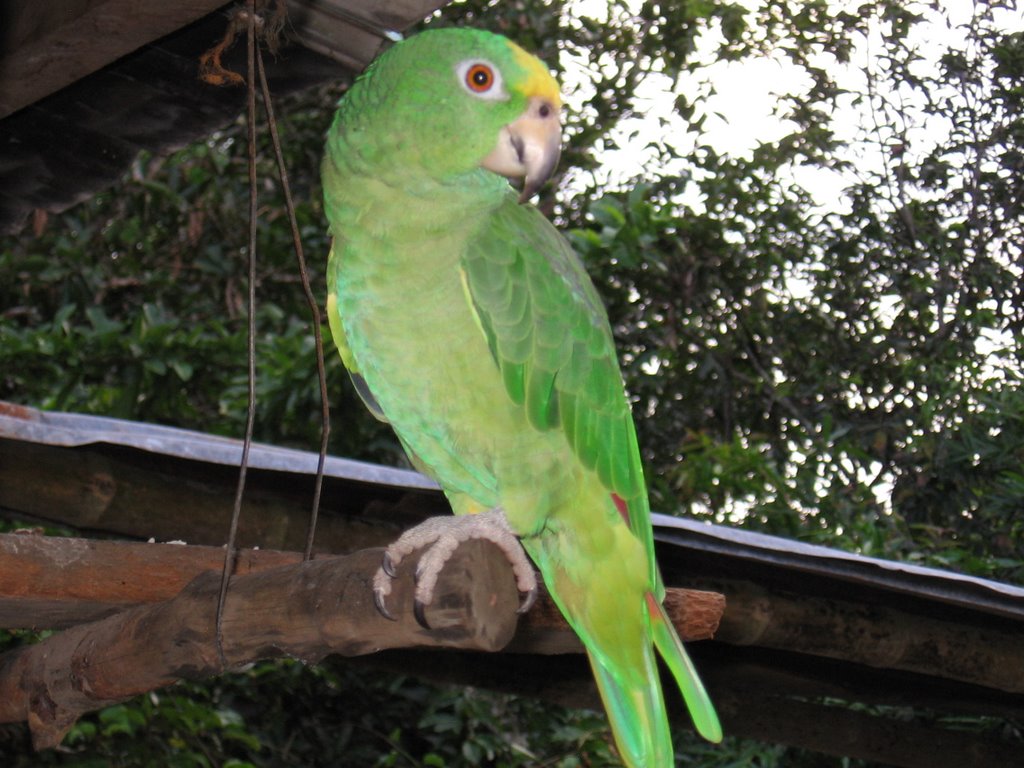
Querida the talking parrot was there to greet me with a loud squawk upon my return from Panama City last week. My host abuelita asked me if I was going to buy a parrot when I move to my own place next month. She is very concerned about my living alone and lejos, even though the house is just around the corner. I have developed a certain attachment to the bird, and will be back to visit and converse with it once the move is made. For now, I´m waiting for the owner of the house to return from his work on a nearby island so he can begin finishing the place. Right now it has no sink, shower, latrina...virtually nada.

I was comforted by the parrot´s greeting after an exhausting week in the city...a nice welcome back to the tranquilo lifestyle in the campo. I made the 14-hour round trip bus ride with intentions of getting a little work done in the office headquarters, and seeing some friends that were in town for a conference. Both of these goals were accomplished, but the change of lifestyle from 9pm bedtime to going out with friends in the American-esqe cuidad left me without much energy for our regional meeting in the mountain town of Boquete. Nonetheless, the meeting went well, and I was encouraged by meeting some of the veteran volunteers. The director of the entire Panama program came to my site the next day, and I may have been deliriously tired. Remembering the day arrives to my mind in snapshots, like a dream, one of which is the parrot singing his greeting to me as I stumbled in the door, forgetting to pay the taxi driver in my excited and tired state. What amazes me as I reflect on this day is that arriving to my host family`s house after almost a week away actually felt like coming home.

Tuesday, September 26, 2006


Mental health is important, and in a new, foreign environment perhaps more difficult to maintain than under "normal" circumstances. Every couple of weeks my fellow Chiriquí volunteers and I get together to share stories, speak English and bounce ideas off of each other. These reunions are, of course, strategically planned to be located in interesting areas. The city of David is not so fascinating to me anymore, but our home base city was fun to explore during our first get-together. Playa Las Lajas is known as one of the most beautiful and best surfing beaches in the country, so in order to fully be knowledgable about our region of Panama, we had to visit this place as well. Boquete (aka "Gringotown") was a great escape into the mountains for some cooler weather and great coffee.

This past weekend, our group ventured to Isla Boca Brava, an island situated in the Golfo de Chiriquí. The islands in the area are densly forested and vibrant with life. It turned out to be the most nature-filled weekend any of us have yet experienced. One morning, we woke up to a group of howler monkeys climbing over our cabaña. That day, on an excursion to a white-sanded island (pictured above), we oohed and aahed over a humpback whale that glided nearby our boat. While on the island, a group of these whales breached repeatedly in a breathtaking show. I explored the coral reef nearby, a shelf dominated by P. damnicornis coral and small, brightly-colored reef fishes.

These outings are a terrific way to get to know the area as well as develop a vital support structure of friends for the next two years. Each leaves my spirit lighter and more uplifted and my mind filled with images of paradise. Anyone up for a visit to Panama?

Monday, August 07, 2006


Chocolate-brown eyes question my every step. What am I doing here? I can give the textbook answer: to raise environmental consciousness on a grassroots level, through projects in environmental education and youth groups, ecotourism, and sea turtle conservation. In theory, these ideas and projects are well-developed. However, how do I explain this to the eight-year-old who curiously inquires why I traveled far to visit her pueblo for the next two years? This week I am beginning to learn the value of building relationships, bridging the gap of language and culture, a sometimes frustratingly slow process. Hours will be spent talking idly about the weather, moments of misunderstanding and awkwardness will pass, and ultimately I will be able to call Los Positos my home. I am in Panama to be an ambassador of peace, and perhaps teach a few things along the way. I am already in debt to these people for the amount I myself have learned.

(The photo was taken during a day at Isla Taboga, and island near Panama City, during a brief vacation before arriving to my site)

Thursday, June 01, 2006

Ah independence! Traveling with a group of 34 gringos can be quite tiring after a couple of weeks. Today we were let loose on the country of Panama in small groups to visit sites around the country. The excitement of an airconditioned bus and chaperone-free travel has left me feeling slightly giddy (as well as the anxiousness of missing my chiva ride to the next city due to an urge to find an internet cafe).

I´m traveling with two others to a town in Los Santos, the southernmost, peninsular province in Panama, and tomorrow morning heading to the Pacific coast on my own to visit a current volunteer in Las Canas. I don´t know if I´ll be able to resist the urge to plunge through the mangove forest into the cool waters of the ocean...

Highlights so far: seeing squirrel monkeys jump through the trees, hiking through the jungle to get ´fertilizer´from the nest of leaf-cutter ants, building an organic garden with my host family, learning sustainable farming techniques, hearing a swarm of African flies buzz over our Spanish class, crossing the Puente de las Americas, coconut ice cream...