Showing posts with label picture. Show all posts

Saturday, March 03, 2007

If you find yourself in Panama the 11th of March, make sure to stop by my beach, playa la Barqueta, for first annual artisan's fair! It's amazing how fast a seemingly crazy idea can turn into a full-blown project once you put your mind to it. I've been working hard organizing and promoting this fair that will take place next weekend, one of many events that will contribute to ecotourism revenue in the area. Fifteen art vendors from the area will be coming to sell their art, in addition to local food vendors, a folkloric dance group performance, and a discoteca dance for all at night. Many tourists (local and international) arrive to the beach, especially during the dry season. We hope to establish a permanent local market in the future in this site.

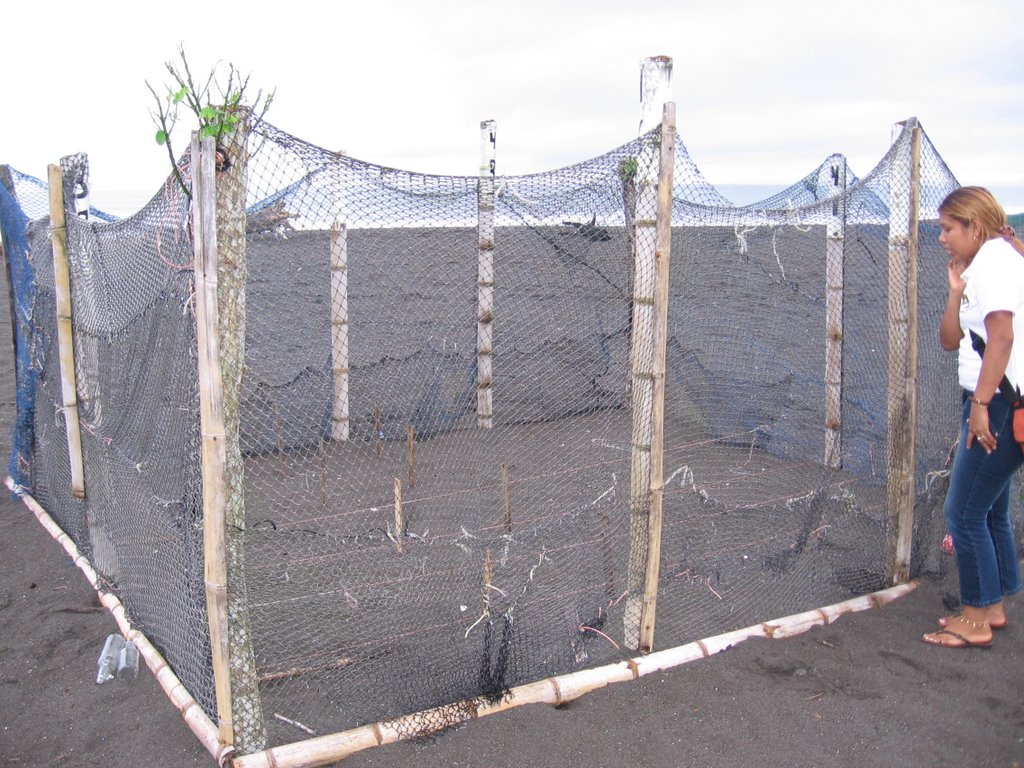
Some of the proceeds from the fair will go toward the sea turtle conservation project, specifically the construction of a new sea turtle hatchery that we will be constructing before the next nesting season begins in June. I will be posting a link to a website in the near future, for all those interesting in contributing to the project from home. My community counterpart, Marcial, and I will be travelling to Bocas del Toro this month, where the Caribbean Conservation Corporation (CCC) is holding a training seminar about correct management of sea turtle conservation projects. I am excited to finally see some mature female sea turtles! March is the primary nesting month for the Caribbean Loggerhead sea turtle, and the seminar will take us to one of the main nesting sites in Bocas del Toro.

My Panama Verde youth group is going strong so far, although with the start of classes next week there may be a few changes. The kids are excited about all of the activities so far, which have included an ecotourism lecture and visit to the beach, a community garbage clean-up and today an a jewelry-making lesson from a local artisan. We collected shells and decorative seeds to make into jewelry, possibly selling some art at the fair next weekend. I enjoy working with the youth (this group ages 12-20), and they keep me busy with visits and mini-dance parties in my house.

On Monday I'm off to a partner's conference in the province of Panamá, again taking Marcial away from his first month as a park ranger for ANAM. I look forward to seeing my friends again and taking a little break before the fair next weekend! ¡Que va!

Wednesday, February 14, 2007


Feliz dìa de amor y amistad!

I took myself on a date to Boquete, to enjoy the cool breeze and excellent coffee. Last month, I was here for the Feria de las Flores y el Cafè, where I visited the orchid house and fell in love with the strange and gorgeous flowers, like the variety above.

The new year has escalated into a frenzy of activities. Today is a breath of fresh air, between yesterday's day trip to the beach with my new Panamà Verde group (Jovenes Guardianes de la Naturaleza - Young Nature Guardians), and tomorrow's paseo to another beach, playa Malena, in the province of Veraguas. At playa Malena, a previous Volunteer helped build a sea turtle hatchery that we would like to replicate at my site on Barqueta beach. From there, I will visit a few of my friends in the province of Herrera just in time to get a taste of culture during the famous Carnavales in Las Tablas.

Winter storms?

In the city of David, the average forcasted temperature for the next 10 days hovers around 95 degrees F. The UV Index today is 9 (out of 10). Walking down the dusty, wind-swept streets becomes a game of finding the nearest patch of shade to duck under. In the afternoon when the wind picks up, the sweat flows that freely from every oozing gland is tossed into the air, immediately vaporized. Last night was so miserable that to fall asleep I splayed out on the 1/4" thick yoga mat on my cool, concrete floor, next to the kitty who was also disfrutar-ing the relative freshness of the piso. It's the antithesis of the negative-degree temperatures I used to experience during a Minnesota February. There, any moisture exposed to the air immediately froze (snot, eyeballs, etc.) . Here, the hot air costricts the throat and dessicates the body. Which is why I came to Boquete for a day. Paradise found.

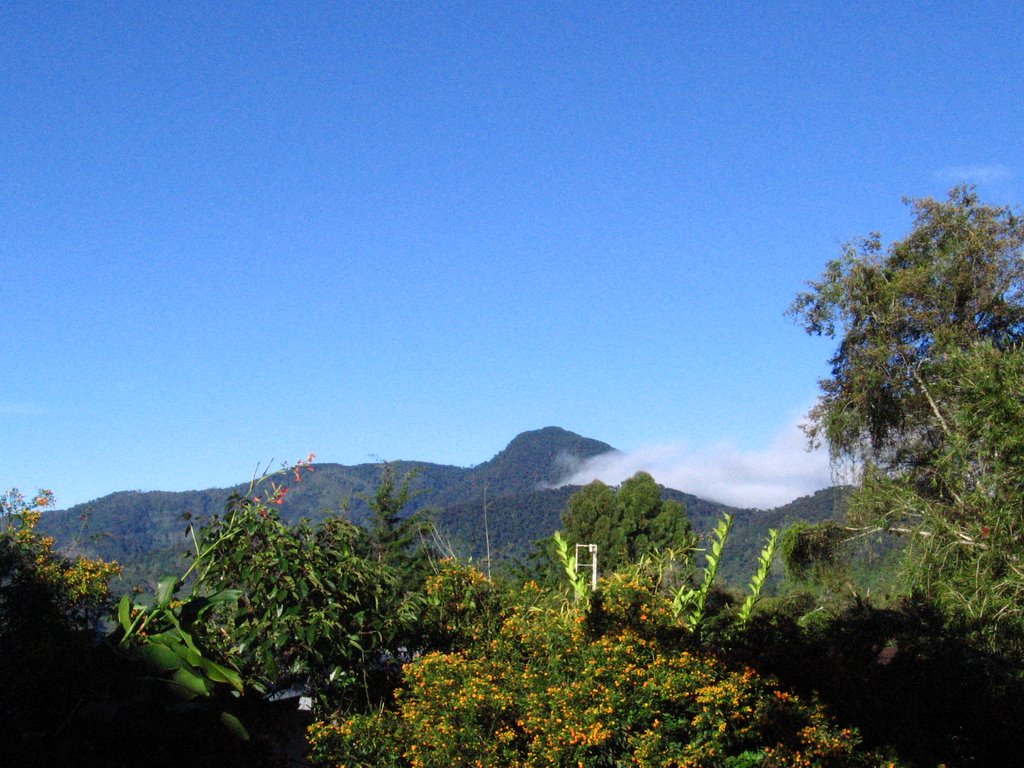
If it wasn't hot enough already, summer is the time for burning. Hundreds of acres of burning sugarcane fields shoot plumes of brownish soot up into the atmosphere 24/7, creating a low cloud of smog that obstructs the view of the mighty (inactive?) Volcàn Baru. When the winds change, the ash descends to coat everything, including lungs, in a fine film of dust (cough, cough). And they're proposing sugarcane ethanol as an alternative "clean" fuel? One of the next Panamà Verde projects will be garbage management, including offering alternatives to burning garbage. For now, I will enjoy the fresh mountain air!

Que tenga un dìa llena de amor y felicidades.

Wednesday, January 24, 2007


I got a kitty. Isn't she cute?? Her name is Fantasma, the Spanish word for "ghost", which really freaks out some people in my town, especially since she has one blue eye and the other grey-green. When she's not scratching up my legs by trying to climb me, she's a great companion and source of entertainment. Plus, it gives the neighbor kids something to do on their daily visits.

As I was popping open a can of kitty-formulated tuna the other day, I got to wondering what exactly was in the tuna that made it especially for gatos y gatitos. (What are they feeding you?) The ingredients list didn't give any clues, and judging by the price it's the same as any ordinary can of tuna. I'm guessing they took all the parts that people don't eat and canned them up to sell to people like me who think that they're feeding their pet a nutritious meal. The kitty seemed to like it.

On the subject of food, the book The Omnivore's Dilemma: a natural history of four meals, by Michael Pollan, provides an in-depth examination into the American psyche of eating. Pollan tracks the elements of four meals back to their agricultural roots, a journey that at times is surprisingly long and complex. Pollan takes the reader to Iowa corn fields, the birth of baby greens in California, a self-sustaining Virginia farm and hunting for wild boar, in order to answer oft-ignored questions. If you are what you eat, do you really know what you're eating and where it came from? How much oil got burned to churn that corn into a ready-to-eat processed delight, shipped to be picked up from your nearest McDonald's? What does organic really mean and is it good enough? Pollan calls America out on it's "national eating disorder" and engages the reader with his witty stories and writing style, leaving no choice but to think harder about the impact our food choices make on the health of ourselves and the environment.

So while you're out doing your latest civic duty at the local Whole Foods, I encourage you to swing by the book store on the way home if you want to know what's really for dinner. If you dare.

Kitty couldn't care less.

Saturday, January 06, 2007

From a cloud forest surrounding Volcan Baru to a sponge garden overtaking a wreck in the Caribbean, 2006 progressed into 2007 not uneventfully. After a brief stop in Panama City, Chan and I made our way across the country, where we met up with friends to celebrate Christmas in Cerro Punta, a mountain town surrounded by lush cloud forests. Christmas dinner was prepared in a dark cabin, sin electricidad, and after a few struggles with gas lanterns and Panamanian-style free-range chicken, our dinner turned out to be quite delicious. The coolness of the area added to the holiday atmosphere.

A five hour hike down the backside of the volcano led us to Boquete, where we enjoyed an excellent coffee tour at Kotowa coffee estates, of course complete with a tasting of their delicious shade-grown coffees. Evidently, the cloud forest in the area provides enough shade for the coffee trees that they fall in the category of shade-grown, although they do not grow directly beneath other shade-providing trees.

Grudgingly, I left the cool mountains and returned to my site in Los Pocitos for a couple of days. We spent an afternoon lounging on the Pacific beach before I put Chan to work making a table and doing other household chores.

A trip back over the mountains brought us to the Caribbean Sea and Bocas del Toro. We enjoyed a wreck dive off the coast of Isla Colón. The wreck was surrounded by a range of colorful sponges and corals, and our guide managed to point out a nurse shark resting under the helm of the sunken ship.

Finally, after two long bus trips we arrived back in Panama City, from which we spent a couple days in the sun on Isla Taboga, snorkeling, swimming and hiking. Although of course too short, I enjoyed showing off the wonderful diversity and beauty of Panama.

Thursday, December 07, 2006


After a few days of refresher training courses, I am fried. The brain is working at the rate of a Panamanian sales clerk. The tech classes and advice from current Volunteers were inspiring, the Spanish lessons needed and the ocean swims refreshing. However, this is the first time our training group had been all together since July. Being isolated from all other Volunteers the majority of the time causes us to go on a bit of a social binge when we finally do get together. There was a lot of catching up to do and that we did and then some.

Two weeks until Christmas vacation! Mi novio Chan is coming down to keep me company during my first xmas away from home. I'm excited to do some more traveling within the country. The ever-changing itinerary presently consists of:

Dec 22-24: Panama City - Panama Canal, Casco Viejo
Dec 24-25: Cerro Punta, in the highlands of Chiriquí
Dec 26-27: Boquete, Chiriquí (hiking, coffee tour, Volcán Baru)
Dec 28-29: Los Pocitos, Chiriquì (my site) on the coast
Dec 29-Jan 04: Portobelo, Islas Kuna Yala, Panama City

It will be difficult to stay focused for the next couple weeks!

(The pic is from back during training days)

Wednesday, November 29, 2006


My lips were medio-purple I was so cold. It was raining in the cool mountain town of Volcán yesterday, but the parades still marched on. And on and on literally all day and into the night. Marching bands from colegios all over the country slowly moved thdown the street, the students oblivious to the cold rain that soaked their costumes through. After months of practice, they were not going to let a little rain spoil the mood on the final day of the Fiestas Patrias. I, on the other hand, was glad to be tucked under and umbrella, coffee in-hand. The mood was festive, and I fully enjoyed the day of parades, crafts, music, friends and food. A woman who attends my English class took me under her wing for the day. She and her husband brought me up from David to enjoy the festivities in Volcán. Their youngest daughter just graduated from high school and is spending a few months studying English in the States, so I got to be the hija for the day. I stayed with them in David for the night. They made me feel very welcome and I am grateful for their kind hospitality.

David, being one of the larger cities in Panamá, has a higher standard of living than even where I live, only an hour away in el campo. My stay last night in a regular David house made me realize that there are many things I have learned to live without, and others that I have actually forgotten about.

Luxury items: napkins, hot showers, hair dryers, flush toilets, glass windows, electric appliances, anything not plastic (glass plates, glasses, wooden chairs, etc.), tile floors, cleanliness...

Things I'd forgotten about: cream cheese, real orange juice - the kind with pulp, paper towels, those little mats you put in the shower, bathroom rugs, bowls made specifically for sugar, candied apples

Compared to some of my fellow Volunteers, I still live in relative luxury at my site, but I'm glad I am growing to appreciate some of the things that I used to take for granted.

That being said, today I'm going to buy a bunch of cheap, plastic things to put in my house! With the help of my boss, I managed to consiguir una casa and I should be moved in by the end of the week. Excitement! I really do love my host family, and they've treated me very well these past few months, but I will love them more once I have my own little space. Perhaps today I will pick up that celebratory bottle of wine that's been on hold for awhile...cheers!

Saturday, November 25, 2006


It wasn't a traditional place, but the Thanksgiving dinner was not missing any of the essential elements. Cerro Punta was an impressively beautiful place, and the cool climate made the holiday atmosphere complete. I even managed to fully enjoy a couple cups of hot chocolate, topped with fresh whipped cream and cinnamon, the likes of which I've never experienced before in my life. The 100 or so Volunteers that flocked to the Los Quetzales Lodge in Cerro Punta were perhaps a little homesick at times, but surrounded by friends and good food, we were far from being disappointed. Thanksgiving in Panama was another incredible experience that will never be forgotten.

Friday, November 17, 2006


This entry has no theme. Little educational and/or serious life reflections will be covered, so you're in for a treat! The picture above was taken of the Panama City skyline from Hotel Plaza Paitilla Inn, a hotel with great views for a good deal, in case you ever happen to be in the area.

Walking the streets of David earlier today, my sunglassed, no-nonsense stare and purposeful gait were interrupted by a lot of bulla a few blocks ahead. It was a parade, complete with a band: drums beating and horns blaring loudly, stopping the erratic movement of traffic if only for a moment. Although the display turned my head, this occurrence is not completely unusual, November being the month of the Fiestas Patrias (all celebrations involve numerous, lenghthy parades). However, as I scoured my memory for any mention of a November 17th holiday, I saw the sign. No, not The Sign, but a poster announcing the Grand Opening of the new American Style clothing store. Why wouldn't a grand opening call for an all-out parade? This is Panama, and I'm discovering any opportunity to make noise will be pounced on with zeal. I didn't go into the store, but had a sudden, almost irrepressable urge to run in and denounce the validity of the advertisements that screamed, "Authentic American Clothing!".

Being an American in Panama is interesting. "American" is a class in and of itself, since so many rich gringos have migrated to the area to retire, bringing with them their American-earned dollars and high standard of living. I promised nothing serious so I'll end the commentary there.

The other day I tried sugarcane for the first time. I have to admit, I was slightly disappointed. It was sugary, but far to woody for my taste. Being a chewing gum addict, I can't imagine chomping on thick cellulose for more than a couple seconds, sweetened or un.

In slightly older news, BusinessWeek placed the Peace Corps at #38 out of the 50 best employers for college grads, a little behind big investment and banking corporations, but ahead of Teach for America and the IRS. It's somehow comforting to have someone else (however random) confirm my choice of employer. Or did they choose me? Hmmm.

I'm looking forward to going up to Cerro Punta for a massive Volunteer get-together next week. A Thankdsgiving celebration will be held in the Parque Nacional de Amistad, said to be one of the most beautiful areas in the country (who can rank them, there are so many beautiful places!). I'm excited to celebrate the holiday with some American food and friends, in a cool climate that will provide additional authenticity. Happy Thanksgiving!

Tuesday, October 31, 2006


I've been pasear-ing to different places this past week. Being away more than usual has made it a little easier to bear with still living with a host family, even though I technically could move out any time now. If only there was a house ready to move into...

Wednesday I had the opportunity to go on a trip to the Comarca Ngöbe-Bugle. The comarcas are areas independently goverened by the indigenous tribes of Panama. The poverty level is greater in these areas, however the beauty is astounding. The Ngöbe and Bugle tribes were two independent tribes that combined to rule the area just north of the province of Chiriquì. I went with a group from the national environmental authority, ANAM, to observe and assist with a day-long training of new ANAM volunteers from the Comarca. The day was interesting and inspiring, meeting many people living in poor conditions, yet were motivated and excited about developing more environmentally sustainable ways to live. For example, traditional farming in Panama involves a lot of slash-and-burn agriculture methods, and in the Comarca the burning is relatively uncontrolled, sometimes spreading to virgin rainforests as well as polluting the air with thick smoke. The farmers of the Comarca Ngöbe-Bugle are interested in learning about other ways to farm, such as making organic fertilizer, and investing in reforestation projects.

A lot of work goes into a cup of coffee, as I found out on Friday I went to visit a friend's site to help with a small coffee harvest and roasting. Coffee is abundant in the mountains of Chiriquì, where some of the best coffee in the world is grown, some of which has been sold for over $50 a pound. My friend and I hiked around the gorgeous coffee fincas in a valley of Volcan Baru, many of which use sustainable shade-growing techniques, and some of which are organic certified. After the hike, we headed to tostar some green coffee beans. The beans are red when on the tree, and are first dried for about at week in the sun, and then de-shelled using either a traditional mortar and pestle method, or on a larger scale, taken to a coffee processing plant. We were roasting a small batch for a local family, so I worked to smash the dry beans, removing the husk but keeping the green beans whole. The husked were then separated completely from the beans by shaking the mixture on a flat board before picking away husk remnants. Finally, the beans were roasted in a large pan over an open flame for about two hours, being stirred constantly, until they were roasted an even, oily black. I drank a lot of very fresh coffee during that trip.

A couple nights ago my friend came to visit, and we spent a night patrolling the beach, looking for nesting sea turtles. The search was unsuccessful, but there will be other attempts! Today I'm heading to a Halloween party in Santiago, a town about half way to Panama City, before going to the city itslef for a few days. Maybe my house will be ready to move into when I return to my site this weekend!

Monday, October 16, 2006


I can't leave the house without getting my feet dirty. There is earth everywhere. Not imported, transplanted, water-sucking lawns, but dirt: dusty, muddy, dirtying. It gets on my clothes and doesn´t come out. It becomes caked on my sandaled toes, to be brushed off before entering the city landscape, where only manufactured gasoline-exhaust dust is socially acceptable.

Around my house grow trees and plants that from this same dirt that produce edible items ranging from the mundane root vegetable to sweet, juicy, tropical fruits. Stores do exist for luxury items like milk and the oil that my host abuelita uses to fry everything in sight. I tend to seek out the grocery stores more often than the locals, not quite weaned off of their abundant wealth of imported choices. I enjoy feeling an attachment to the earth, and I am truly excited to begin an organic garden, compost pile and composting latrine when I move into my own little place.

There are endless ways to become re-attached to your own parcel of the planet:

1. "Live Consciously, Buy Wisely, Make a Difference" - Check out the New American Dream.
This is a comprehensive site of ways to "green" your life. Save fuel resources by buying from local merchants (find your closest stores and markets with this map!). Turn the Tide by making nine simple lifestyle changes, including replacing one car trip a week with an alternate mode of transport.

2. Don't know any alternate transport methods? Find them and become an advocate for public transportation. It will not only contribute to the health of the environment, but an improved tranport system can improve your own health as well. If you can't get there by public transport, think about carpooling or ridesharing. Of course, there's always walking or biking, if you are lucky enough to live in such a place where such things are possible without risking your life. If there are no sidewalks, form a group to lobby for better walking conditions!

3. Turn waste into yummy foodstuffs. Fancy bins aren't neccessary to compost organic wastes, and there's even indoor non-smelly wormbox methods if you don't have space for a pile. No better organic fertilizer to be found (except maybe the future compost from my sawdust bucket toilet that will most definitely make for some extra-juicy tomatoes next year).

These are just a few options to quench that Earth-Zen craving you didn't even know you had. There are a world of ways to break those Wal-Mart Superstore-inspired habits, even inside the confines of the ultra-comfy cushions of the American consumer society. Be inspired by the dirt.

Monday, October 09, 2006


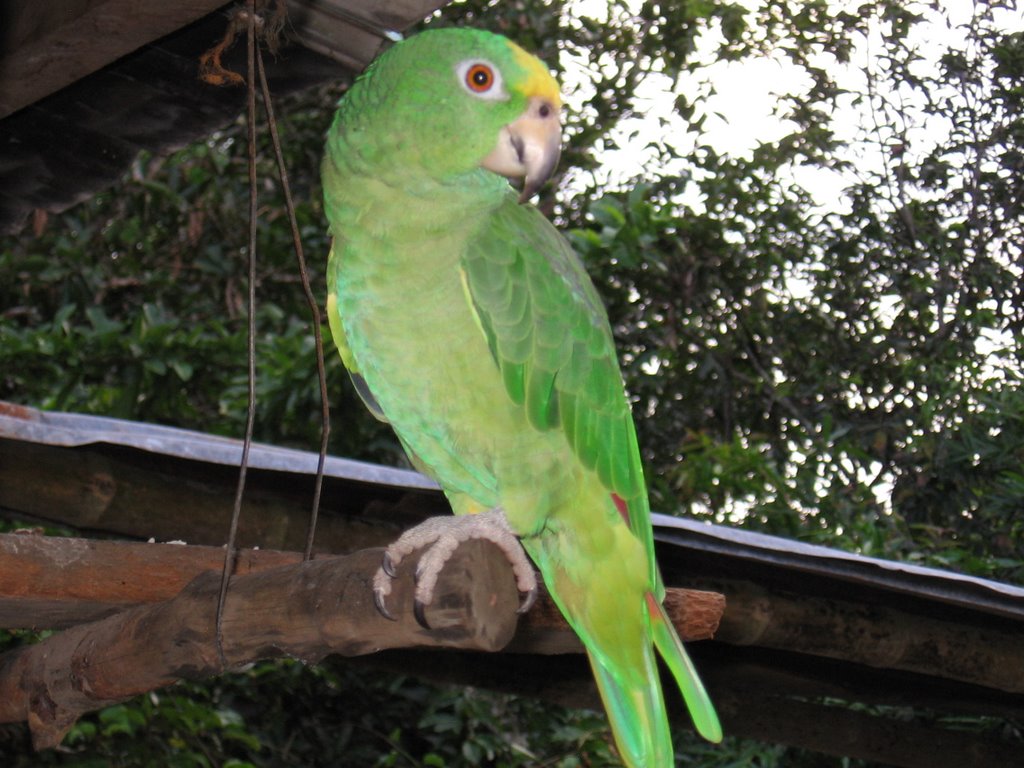
Querida the talking parrot was there to greet me with a loud squawk upon my return from Panama City last week. My host abuelita asked me if I was going to buy a parrot when I move to my own place next month. She is very concerned about my living alone and lejos, even though the house is just around the corner. I have developed a certain attachment to the bird, and will be back to visit and converse with it once the move is made. For now, I´m waiting for the owner of the house to return from his work on a nearby island so he can begin finishing the place. Right now it has no sink, shower, latrina...virtually nada.

I was comforted by the parrot´s greeting after an exhausting week in the city...a nice welcome back to the tranquilo lifestyle in the campo. I made the 14-hour round trip bus ride with intentions of getting a little work done in the office headquarters, and seeing some friends that were in town for a conference. Both of these goals were accomplished, but the change of lifestyle from 9pm bedtime to going out with friends in the American-esqe cuidad left me without much energy for our regional meeting in the mountain town of Boquete. Nonetheless, the meeting went well, and I was encouraged by meeting some of the veteran volunteers. The director of the entire Panama program came to my site the next day, and I may have been deliriously tired. Remembering the day arrives to my mind in snapshots, like a dream, one of which is the parrot singing his greeting to me as I stumbled in the door, forgetting to pay the taxi driver in my excited and tired state. What amazes me as I reflect on this day is that arriving to my host family`s house after almost a week away actually felt like coming home.

Friday, September 29, 2006


It looks so easy, the business of being a kid. What synapses in our brain die as we age? We stop growing, eventually (except our noses, ears and waistlines: the uglier parts), learn and move at a slower pace. The older we get the more pruned our brains become, shedding the "unneccesary" connections. Essentially, what appears to be simplicity in childhood is actually complexity, unrefinement, the happiness of a brain yet unformed but forming by a small world of experience.

Yesterday I spun in circles with my arms out until I got so dizzy I fell down. The second-grade girls next to me fell down a few seconds later, while my head spun in a spun-drunk dizzyness, the nauseous feeling finally fading about an hour later. The girls got up right away, ready to invent some other game involving a tennis ball and a pair of plastic flip-flops while I sat in the grass wondering if I ever truly thought that game was fun and needing a small helping hand to get up. Evidently a few of the nerves connecting my enlarging ears to my brain have died, making the sense of equilibrium harder to acheive after a good spin. If I spin like this every day can I re-learn to not get quite so dizzy?

Tuesday, September 26, 2006


Mental health is important, and in a new, foreign environment perhaps more difficult to maintain than under "normal" circumstances. Every couple of weeks my fellow Chiriquí volunteers and I get together to share stories, speak English and bounce ideas off of each other. These reunions are, of course, strategically planned to be located in interesting areas. The city of David is not so fascinating to me anymore, but our home base city was fun to explore during our first get-together. Playa Las Lajas is known as one of the most beautiful and best surfing beaches in the country, so in order to fully be knowledgable about our region of Panama, we had to visit this place as well. Boquete (aka "Gringotown") was a great escape into the mountains for some cooler weather and great coffee.

This past weekend, our group ventured to Isla Boca Brava, an island situated in the Golfo de Chiriquí. The islands in the area are densly forested and vibrant with life. It turned out to be the most nature-filled weekend any of us have yet experienced. One morning, we woke up to a group of howler monkeys climbing over our cabaña. That day, on an excursion to a white-sanded island (pictured above), we oohed and aahed over a humpback whale that glided nearby our boat. While on the island, a group of these whales breached repeatedly in a breathtaking show. I explored the coral reef nearby, a shelf dominated by P. damnicornis coral and small, brightly-colored reef fishes.

These outings are a terrific way to get to know the area as well as develop a vital support structure of friends for the next two years. Each leaves my spirit lighter and more uplifted and my mind filled with images of paradise. Anyone up for a visit to Panama?

Tuesday, September 05, 2006


PROYECTO DE ECOTURISMO, LA BARQUETA

There is a need to organize and further develop the conservation and tourism activities of playa La Barqueta. Today, tourists from around the world travel to Barqueta beach to enjoy the calm beauty of the area. There are independent measures being taken by members of the community to conserve and protect the marine turtles that arrive to the beach and clean the area of garbage. To better and further develop these activities in order to serve the community and educate tourists, it is necessary to work together with every interest group to establish a sustainable ecotourism project on Barqueta beach.

Barqueta beach, located within the coastal zone of the Gulf of Chiriquí, is an important nesting site for the Olive Ridley (Lepidochelys livaceae), Loggerhead (Caretta caretta), Green turtle (Chelonia agassizi), Leatherback (Dermochelys coriaceae), and Hawksbill (Eretmochelys imbricata) sea turtles, five of the eight species of sea turtles that exist in the world, all of which are in danger of extinction. The wildlife refuge La Barqueta serves to protect these turtles. Also, the area possesses a significant amount of mangroves, bird nesting sites, and forms a part of a route for migratory birds.

Gains from ecotourism can amplify available funds to contribute to conservation measures in the area. More support is necessary to protect and conserve the sea turtles of La Barqueta. Many threats exist for the turtle mothers that arrive to the beach to deposit their eggs in nests dug into the sand. Dogs bite the fins of the turtles, killing them indirectly and slowly because they will not be able to swim when they return to the ocean. Humans plunder the nests, removing the eggs and selling them in the black market for US $0.50 - 1.00 per egg. The myth that turtle eggs are an aphrodisiac is slow to fade in Panama, and the eggs are ingested at local bars along with the local brew. Sea turtle is still eaten in this area of the world, and turtles at this beach are sometimes killed for their meat as they lay their eggs.

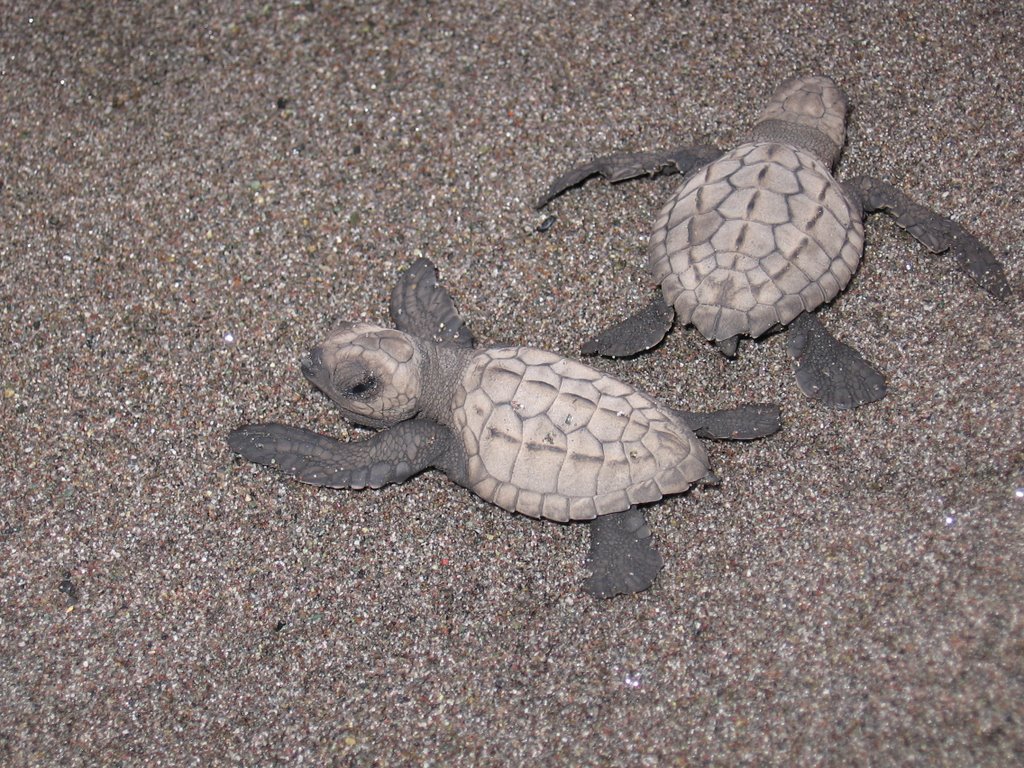
The Comité de Ambientalistas de Alanje was a group formed in the eighties to protect the sea turtles at Barqueta beach. During their years of operation, the group collected approximately 11,000 eggs per year, freeing around 9,000 hatchlings each year. With the arrival of a hotel and other tourism operations in the area, conflicts arose with the environmental group, and it is now in a state of stagnancy and degredation. Local volunteers (aka. one of my assigned partners) patrol the beach every morning to collect the eggs deposited over night and move them to protected viveros. The national envionmental authority, a youth group called Panama Verde, members of local universities, and a few local volunteers give educational talks to the community, hold turtle liberations where the neonates are release from the vivero, and organize beach clean-ups.

Development of an ecotourism project requires support from both the community and local agencies. It is necessary to organize an ecotourism committee to manage the conservation and tourism activities, and to find and train potential guides. Further considerations are the marketing and money management aspects of the project. There are several interest groups in the area, including the national environmental authority, local businesses, schools, youth groups, and universities, that can organize to develop a sustainable project. These groups, with help from the national tourism committee, can form a powerful business enterprise.

Why ecotourism at Barqueta?

1. Increase the amount of beach patrols. Currently, one man alone patrols 20 km of the beach every morning (he runs). Also, the national environmental authority patrols the beach off and on, fairly unreliably. With more funds and heightened interest through education, members of the community can work together to patrol the area every night, and serve as guides for ecotourists. One potential activity could include night walks with tourists, to watch for turtles coming to lay their eggs and protect them from predators.

2. Minimize poaching activities. Some of the profits from ecotourism will be used to pay members of the community to bring the eggs to viveros, rather than sell them on the black market in David. An increased number of beach patrols should also help to decrease poaching.

3. Increase education about sea turtles on a local and international level. With organized conservation activities there are many opportunities for education. In the community, field trips to the beach to participate in beach clean-ups and neonate liberations can be a hands-on supplement to lectures in class. Ecotourism attracts tourists from around the world, increasing consciousness about this topic on a world level. Attention to the area will potentially attract support from international organizations.

4. Keep the beach clean. To have succuess with a tourism project, the beach should be cleaned frequently, using a regular schedule. This serves to provide a more beautiful view and also protects the turtles, as many die from ingesting garbage floating in the ocean. A favorite food of many turtles, the jellyfish, looks uncannily like a plastic bag floating in the water (I´ve made the mistake before myself!). If there is interest, ecotourists can be included in keeping the beach clean, picking up trash items during night walks.

5. Promote scientific study of turtles in the area. Organized conservation measures open the door to scientific studies. The development of updated databases will show the level of success of the project, and also attract international respect and support.

The majority of training of guides and economic development can be given by local agencies and organizations. Already there are many tourists that arrive to Barqueta beach to stay in the local hotel, cabanas, and enjoy the restaurants. Further advertising is necessary to attract more tourists (of the eco kind, especially), on a local and international level. Suggestions include development of a web page and contact with the local tourism agency. The majority of the expenses of the enterprise fall in the categories of paying members of the community as guides and compensating for eggs brought to the viveros by would-be poachers. Without getting into details, a small suggested donation per tour most likely will not enough to compensate for the current market price of the turtle eggs. Outside funds must be found, such as soliciting funds from nearby business enterprises (aka the hotel), or from outside environmental organizations. Perhaps an adopt-a-turtle project. I don´t know...I don´t know if we´ll have enough time...

With the multitude of natural resources in the area, there are many options for other ecotourism activities that could be advertised in packages. For example, the wildlife refuge La Barqueta offers the unique experience of a boardwalk through the mangroves where birds, monkeys and other animals reside. Guides could bring ecotrourists through the boardwalk, or through the mangroves on boats, and offer their knowledge about the local flora and fauna in addition to a refreshing coconut picked right off the tree. Also, there is great fishing in the area, both in the mangroves and deep sea. Kayaking, surf lessons...the options are endless. If the preliminary project is successful, it would be great to have some 4WDs for the less hearty to enjoy the tours. Or helicopter tours...that´s always cool. And skydiving into rice fields. We´re starting small.

(Loosely interpreted from my spanish...hehe)

Thursday, August 31, 2006


A walk through the mangroves in the wildlife refuge adjacent to my site provides a shady respite from the fuerte sun that beams down every day. The Refugio de Vida Silvestre La Barqueta was created to protect the fragile mangrove ecosystem, including the migratory bird species that come to rest in the trees´high branches for months at a time. Right now, hundreds of elegant, long-necked white egrets crowd the mangroves and the nearby rice fields. Other bird species include a variety of hummingbirds, ducks, hawks, vultures, pelicans, and yellow-breasted songbirds that sing fantastically.

Monkeys also reside in the mangroves and nearby forests. A friend of mine spotted one yesterday on the way home from a meeting. Locally known as the "cariblanca" (white face), this cute monkey was swinging from the branches as we drove by its tree. Stopping the car to watch for a moment, the driver compared the appearance of the monkey with norteamericanos. The driver then proceeded to explain that it was a very intelligent species, often chastised for stealing bananas and other delicacies off of occupied tables. I think they may also throw things at people, although I`ll have to ask a friend of mine to testify to this fact (he was attacked by a crap-slinging group last year). The driver may have been more correct about the white-faced monkey than he could have fathomed.

Tuesday, August 22, 2006


Fallen calabazo in a rainstorm in the backyard

Thursday, August 17, 2006


***I wrote this sitting in a yeye cafè, chuckling to myself as two gringas behind me ordered the same spinach quiche and cappucino as I had just polished off with pleasure. In the States, I love my imported mangos, coffee and wine.***

My host father in Santa Clara works six long days a week at a chicken factory outside of Panama City. ¨Chicken¨was the one English word my host brothers knew upon my arrival. Over a simple, tasty lunch of pollo y vegetales one day, my host mother casually remarked that even though Panama has a fairly large commercial chicken production business, the choice cutlets get sent to the United States. I hadn´t known the US imported chicken; I assumed most was ´grown´in the States, since driving by the smelly Midwestern chicken farms in my youth. Actually, Panama exports about $433 million of goods to the US yearly, neary one half of its total exports. The relationship of the US with Panama is an ongoing pirate´s tale of invasion, politcal unrest, and the search for true freedom.

During the free trade negotiations at the beginning of 2006, the agricultural minister of Panama resigned, citing worries about more lax health standards on US imports (1). Whether this is true or not remains negotiable, yet represents just one of the many high-pressure negotiations between the two countries. Exports of goods from Panama to the US began in the early 1900s with the conception of the United Fruit Company, a US-based banana plantation, located on Isla Colòn in Bocas del Toro. The successful construction of the Panama Canal under the supervision of President T. Roosevelt further complicated political relations between the two countries, ending in a treaty that handed over full control of the Canal to Panama in 1999 . Tensions reached a pinnacle during Operation Just Cause and the removal of Manuel Noriega in the 1980s, when the US invasion resulted in a greatly disputed number of civilian deaths (300-4,000).

Currently, the gorgeous country of Panama drips with alluring economic potential. Panama faces global pressure to expand the Canal, an issue the country will vote on in an October referendum. Advertisements blatantly insist the economic benefits of this expensive investment, backed by President Martin Torrijos. If managed with care, this project could be a boon to the economy, and even the environment, if measures are taken to carefully analyze the impact and allocate funds to environmental restoration as necessary (2). The tourism industry is growing exponentially, propelled by a flood of US retirees (3). I have already met quite a few of these friendly norteamericanos, many who live in the nearby mountain town of Boquete, and a small group who settled on my beach, La Barqueta. Finally, the US-based company Occidental Petroleum seeks to plant a new refinery on a portion of Puerto Armuelles, at the end of the peninsula that stretches into the Pacific near the Costa Rican border.

As development increases in Panama, the job markets change. Large-scale projects such as those mentioned above employ thousands in construction and tourism-based jobs. Many Panamanians are moving to urban areas to take advantage of the booming markets. However, as half of the country prospers, the other sinks deeper into poverty. Panama has the second-highest income disparity in Latin America, behind Brazil, with 37% of its residents living below the poverty line (2). If a current proposal to dam the Indio river for the expansion of the Panama Canal goes through, an estimated 3500 campesinos will be forced to give up their land (2). Advocates of the expansion rebut that the project will employ many thousands of Panamanians.

However, taking away the land for many of these poor farmers is stealing their right to choose the life they want to live. Others are forced into poverty by competition from larger (often foreign) coorporations and sell their land at a cheap price, only to return months later, broke and begging for a job from the same hotel/restuarant/spa owners that previously bought their land. The oil refinery at Puerto Armuelles will undoubtably boost the economy of the region (much more so the economy of the company), but at the price of the environment and the health of those who live nearby.

Yesterday, I sat in the back of a press conference about the proposal of the new US-owned refinery, held by a group of envioronmentalists from the Chiriquí region. I watched as slides from places in the US were shown as examples of what not to do when managing an oil refinery. A woman gave a passionate speech that brought tears to my eyes about the lack of sustainable options for the poor in the area of the proposed refinery. I have expressed discontent in the past, but for the first time in my life, I was ashamed of my country. A slide flashed by displaying the worldwide impact of air pollution from the US, a red cloud of toxins spreading over the northern hemisphere. I thought of the rejection of the Kyoto protocol and hunkered down further in my seat, avoiding the eyes of any cameras that may pass. I do not feel responsible for companies such as these, but as a norteamericano, I cannot remove myself from the masses, the consumerism that propels these companies to exist in the first place.

The fact is, I am not outright opposed to all large corporations and international development. There are many businesses who due their share to improve technology to be more environmentally friendly, and many rich who dedicate their lives to courageous projects. I am opposed to greed that preys off of the resources of other countries without giving back a fair share. In terms of percentage of GNP, the US falls short of all industrialized countries in terms of foreign aid, only recently moving up from last place by one (4). This is embarrassing. I am against those who blatantly take advantage of the world´s poor and the environment in developing countries where the infrastructure is not developed enough to stop such activities (and are sometimes blatantly encouraged). Panama´s tropical lushness is a fragile environment of intricately intwined ecosystems that daily are being destroyed. Ganadores clear rainforests to produce meat for the world´s fast food hamburger cravings, hotels spring up and erode away pristine beaches, and imports of goods wrapped in plastic fill the streets and air with their harmful biproducts, in a country with no infrastructure for garbage removal or recycling. The fact that many of these unsustainable practices are being done by Americans makes me immeasurably sad...and ashamed.

Living in this beautiful environment is a privilege I cannot possibly take for granted. I feel a huge amount of responsibility being an extranjero from the States. I wish to change the image of our country to one that encourages sustainable development, rather than being labeled as coming from a country that siphons the best of the world´s resources into its own bottomless pit of greed. Of course I can´t do this on my own. Build gardens on your city rooftops, buy locally grown organic produce, make an effort to use less gasoline, and por favor, don´t buy McDonald´s hamburgers. That´s all.

Monday, August 07, 2006


Chocolate-brown eyes question my every step. What am I doing here? I can give the textbook answer: to raise environmental consciousness on a grassroots level, through projects in environmental education and youth groups, ecotourism, and sea turtle conservation. In theory, these ideas and projects are well-developed. However, how do I explain this to the eight-year-old who curiously inquires why I traveled far to visit her pueblo for the next two years? This week I am beginning to learn the value of building relationships, bridging the gap of language and culture, a sometimes frustratingly slow process. Hours will be spent talking idly about the weather, moments of misunderstanding and awkwardness will pass, and ultimately I will be able to call Los Positos my home. I am in Panama to be an ambassador of peace, and perhaps teach a few things along the way. I am already in debt to these people for the amount I myself have learned.

(The photo was taken during a day at Isla Taboga, and island near Panama City, during a brief vacation before arriving to my site)

Friday, July 28, 2006


The most rewarding experience from the two - month training was eating a spinach salad, freshly picked from my host family´s organic garden, my first experimental project. It is the most fantastically fresh and tender spinach that has ever entered this mouth. A sprig of the plant was generously donated during a visit to the Los Santos province, and carried back in a plastic bottle (pretty much the only way to recycle in Panama is to re-use). Now as I make my way to my site, I carry a sprig in yet another bottle, taken from the now fully-grown vine that resides back in the garden. If it dies in-transit, it may be impossible to interpret as anything other than a bad omen.

Friday, July 21, 2006


A tremendous thunderstorm, complete with hair-raising electrical activity, marked my last day of Spanish classes during training. Next week I will be sworn in as a Volunteer under the supervision of a few important people, in the Panama Canal Museum, and then tossed out into the country as if I knew what I was doing. My site visit last week both was both encouraging and overwhelming.

One night a storm knocked out the power in the house I was staying at in my site in Los Positos, and without the fan I could hear the sound of the large, strong waves that break on the shore of the nearby beach that resides just past a few bright green rice fields. Unfortunately, the waves aren´t the best for surfing, but I´m sure I won´t be able to resist the urge to jump in for a swim when the tide is low. The luxury resort, Las Olas, resides on Playa Barqueta, a 30 min jog from my town, so if anyone wants to visit and not sleep in a hammock, a room can be arranged at the resort. However, the presence of the resort and its wealthy owners creates an interesting dynamic in a town of rice farmers, a political situation that will most likely be unavoidable.

Saturday afternoon, I suddlenly found myself speaking on an environmental program on radio Chiriqui, a station broadcasted to the entire province. This was the result of a long series of confusing events, and the last place I ever thought I would end up. The week of my site visit was fast-paced, full of meeting people and being led around almost as if I were a celebrity, and as if I could actually understand the rapid Spanish that was thrown at me from all directions.

I both dread and look forward to returning for a daunting two years to the land of lush vegetation, fruit trees weighed down with their gifts, soothing ocean breezes, and many people with their many expectations.