
PROYECTO DE ECOTURISMO, LA BARQUETA
There is a need to organize and further develop the conservation and tourism activities of playa La Barqueta. Today, tourists from around the world travel to Barqueta beach to enjoy the calm beauty of the area. There are independent measures being taken by members of the community to conserve and protect the marine turtles that arrive to the beach and clean the area of garbage. To better and further develop these activities in order to serve the community and educate tourists, it is necessary to work together with every interest group to establish a sustainable ecotourism project on Barqueta beach.
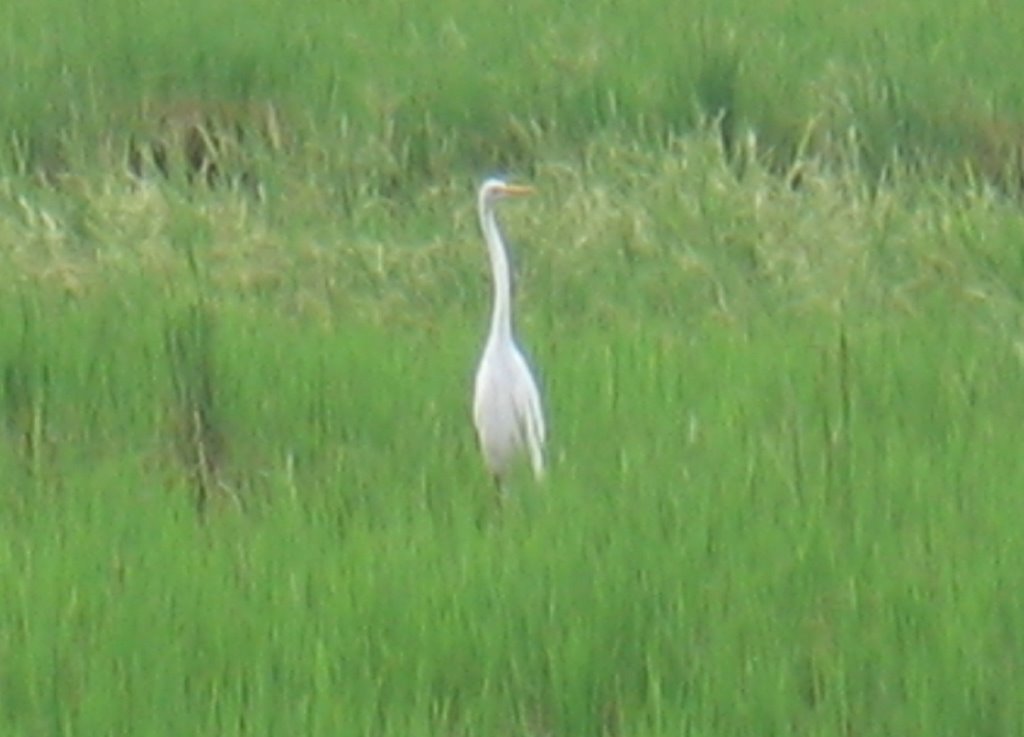
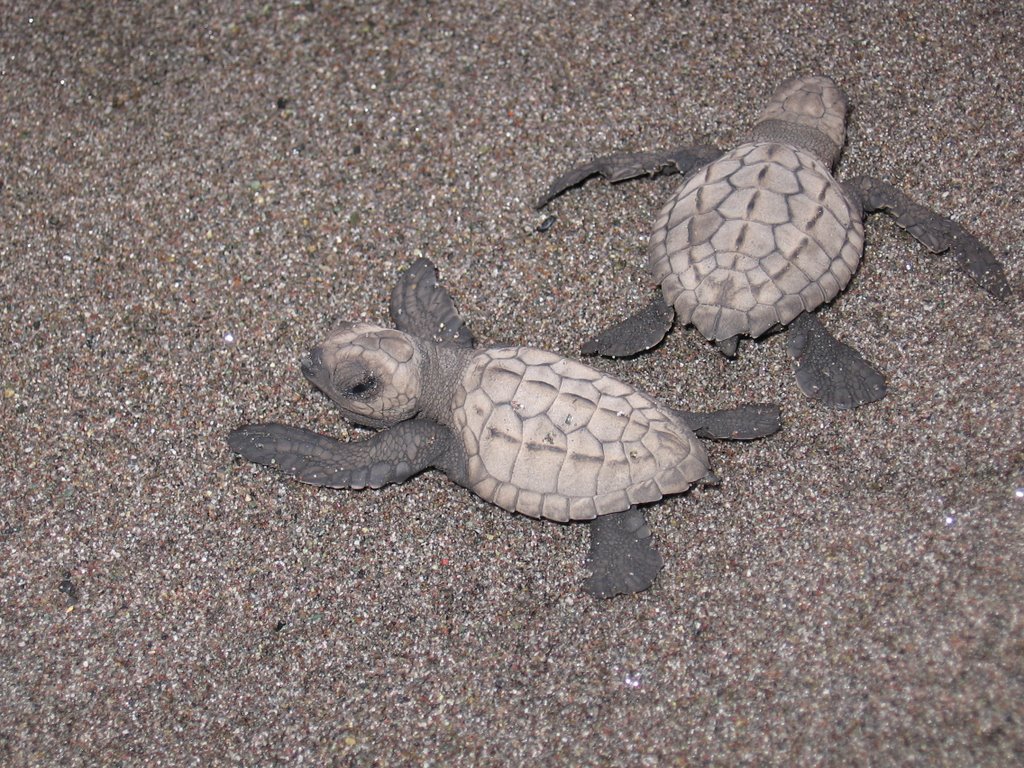
Barqueta beach, located within the coastal zone of the Gulf of Chiriquí, is an important nesting site for the Olive Ridley (Lepidochelys livaceae), Loggerhead (Caretta caretta), Green turtle (Chelonia agassizi), Leatherback (Dermochelys coriaceae), and Hawksbill (Eretmochelys imbricata) sea turtles, five of the eight species of sea turtles that exist in the world, all of which are in danger of extinction. The wildlife refuge La Barqueta serves to protect these turtles. Also, the area possesses a significant amount of mangroves, bird nesting sites, and forms a part of a route for migratory birds.
Gains from ecotourism can amplify available funds to contribute to conservation measures in the area. More support is necessary to protect and conserve the sea turtles of La Barqueta. Many threats exist for the turtle mothers that arrive to the beach to deposit their eggs in nests dug into the sand. Dogs bite the fins of the turtles, killing them indirectly and slowly because they will not be able to swim when they return to the ocean. Humans plunder the nests, removing the eggs and selling them in the black market for US $0.50 - 1.00 per egg. The myth that turtle eggs are an aphrodisiac is slow to fade in Panama, and the eggs are ingested at local bars along with the local brew. Sea turtle is still eaten in this area of the world, and turtles at this beach are sometimes killed for their meat as they lay their eggs.
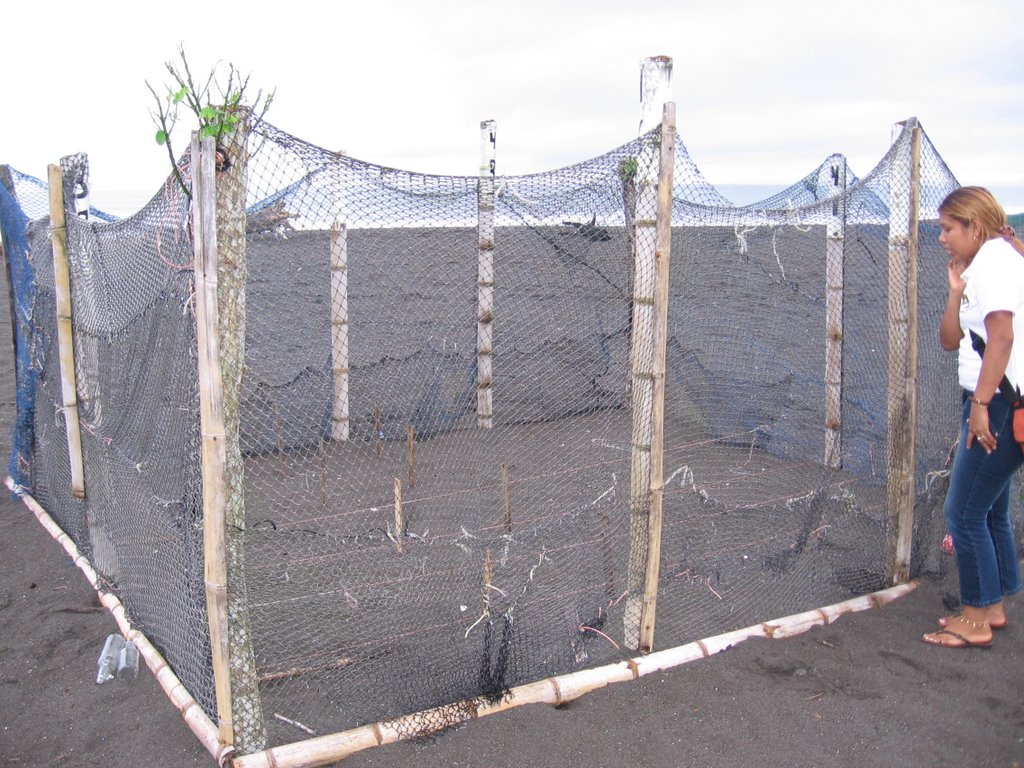
The Comité de Ambientalistas de Alanje was a group formed in the eighties to protect the sea turtles at Barqueta beach. During their years of operation, the group collected approximately 11,000 eggs per year, freeing around 9,000 hatchlings each year. With the arrival of a hotel and other tourism operations in the area, conflicts arose with the environmental group, and it is now in a state of stagnancy and degredation. Local volunteers (aka. one of my assigned partners) patrol the beach every morning to collect the eggs deposited over night and move them to protected viveros. The national envionmental authority, a youth group called Panama Verde, members of local universities, and a few local volunteers give educational talks to the community, hold turtle liberations where the neonates are release from the vivero, and organize beach clean-ups.
Development of an ecotourism project requires support from both the community and local agencies. It is necessary to organize an ecotourism committee to manage the conservation and tourism activities, and to find and train potential guides. Further considerations are the marketing and money management aspects of the project. There are several interest groups in the area, including the national environmental authority, local businesses, schools, youth groups, and universities, that can organize to develop a sustainable project. These groups, with help from the national tourism committee, can form a powerful business enterprise.
Why ecotourism at Barqueta?
1. Increase the amount of beach patrols. Currently, one man alone patrols 20 km of the beach every morning (he runs). Also, the national environmental authority patrols the beach off and on, fairly unreliably. With more funds and heightened interest through education, members of the community can work together to patrol the area every night, and serve as guides for ecotourists. One potential activity could include night walks with tourists, to watch for turtles coming to lay their eggs and protect them from predators.
2. Minimize poaching activities. Some of the profits from ecotourism will be used to pay members of the community to bring the eggs to viveros, rather than sell them on the black market in David. An increased number of beach patrols should also help to decrease poaching.
3. Increase education about sea turtles on a local and international level. With organized conservation activities there are many opportunities for education. In the community, field trips to the beach to participate in beach clean-ups and neonate liberations can be a hands-on supplement to lectures in class. Ecotourism attracts tourists from around the world, increasing consciousness about this topic on a world level. Attention to the area will potentially attract support from international organizations.
4. Keep the beach clean. To have succuess with a tourism project, the beach should be cleaned frequently, using a regular schedule. This serves to provide a more beautiful view and also protects the turtles, as many die from ingesting garbage floating in the ocean. A favorite food of many turtles, the jellyfish, looks uncannily like a plastic bag floating in the water (I´ve made the mistake before myself!). If there is interest, ecotourists can be included in keeping the beach clean, picking up trash items during night walks.
5. Promote scientific study of turtles in the area. Organized conservation measures open the door to scientific studies. The development of updated databases will show the level of success of the project, and also attract international respect and support.
The majority of training of guides and economic development can be given by local agencies and organizations. Already there are many tourists that arrive to Barqueta beach to stay in the local hotel, cabanas, and enjoy the restaurants. Further advertising is necessary to attract more tourists (of the eco kind, especially), on a local and international level. Suggestions include development of a web page and contact with the local tourism agency. The majority of the expenses of the enterprise fall in the categories of paying members of the community as guides and compensating for eggs brought to the viveros by would-be poachers. Without getting into details, a small suggested donation per tour most likely will not enough to compensate for the current market price of the turtle eggs. Outside funds must be found, such as soliciting funds from nearby business enterprises (aka the hotel), or from outside environmental organizations. Perhaps an adopt-a-turtle project. I don´t know...I don´t know if we´ll have enough time...
With the multitude of natural resources in the area, there are many options for other ecotourism activities that could be advertised in packages. For example, the wildlife refuge La Barqueta offers the unique experience of a boardwalk through the mangroves where birds, monkeys and other animals reside. Guides could bring ecotrourists through the boardwalk, or through the mangroves on boats, and offer their knowledge about the local flora and fauna in addition to a refreshing coconut picked right off the tree. Also, there is great fishing in the area, both in the mangroves and deep sea. Kayaking, surf lessons...the options are endless. If the preliminary project is successful, it would be great to have some 4WDs for the less hearty to enjoy the tours. Or helicopter tours...that´s always cool. And skydiving into rice fields. We´re starting small.
(Loosely interpreted from my spanish...hehe)